Jeremiah Alonzo is on a mission to change that, one hitter at a time.
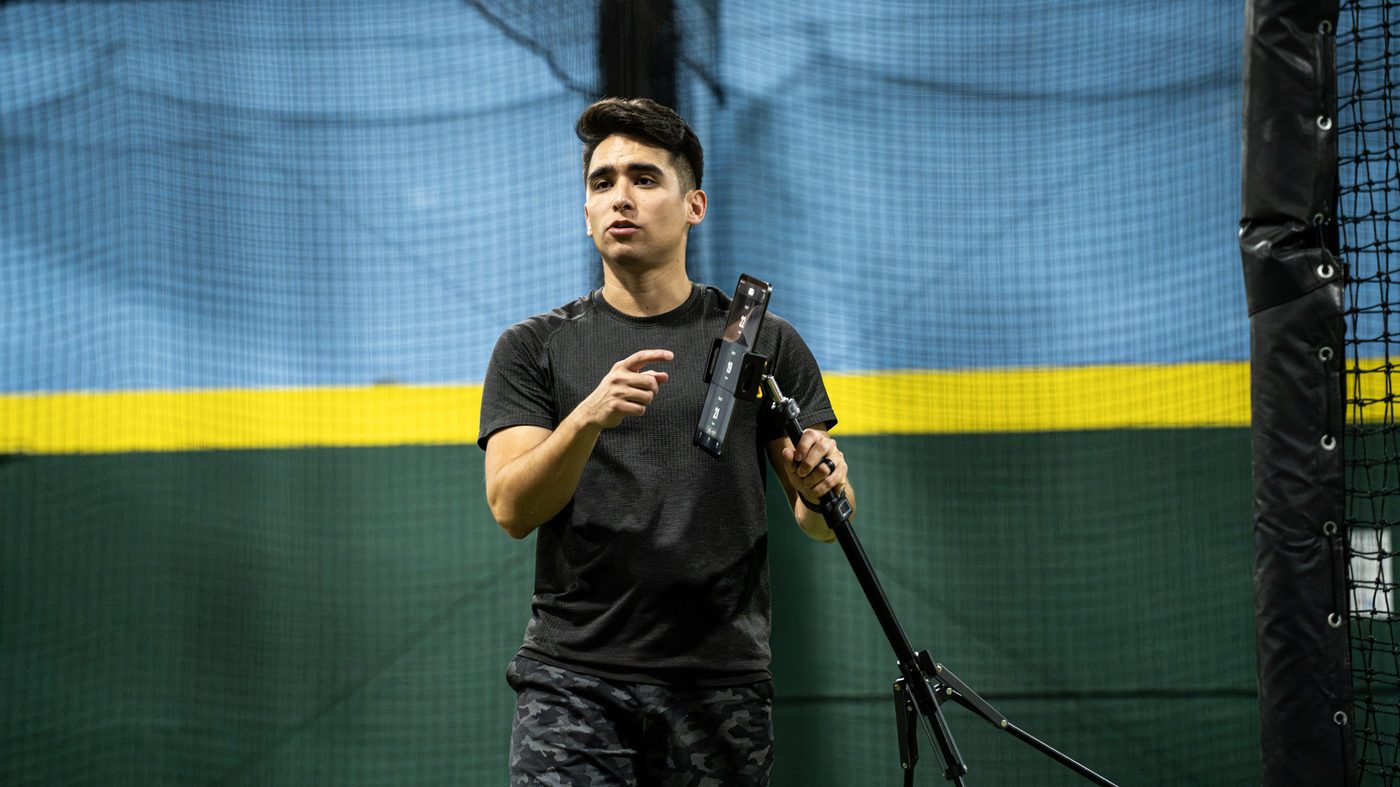
My entire approach is built around one question most hitting coaches never truly answer: what does the data actually say produces results at the plate? I found the answer. And it has changed the trajectory of every hitter I work with - including an MLB player who ended up earning $25 million because of it. Keep reading until the end to see the story.
Compare it to pitching. On the mound, the field mostly agrees: maximize velocity without compromising the arm, and build in real arm care. Ask ten pitching coaches and you'll hear the same core message.
Hitting is the opposite: a dozen competing philosophies, everyone chasing results a different way, and more technology in the building than ever, used most of the time in the wrong context. With the rise of that technology, it's clearer than ever what actually works. Most people use it incorrectly.

Here's where most coaches go wrong. Take a hitter labeled a "contact" or "get-on-base" type. The standard advice is to hit the ball the other way, or up the middle. It sounds safe. It's also wrong. The hitters with less natural power are exactly the ones who need to learn to pull the ball in the air. Done correctly.
And the numbers don't just back it up. They scream it. Across MLB, hitters have a batting average of .547 on balls they pull in the air and a slugging percentage of 1.227. That's a slugging percentage of 1.227, not an OPS of 1.227. Mind-blowing, right? On balls hit in the air anywhere else? Just a .319 batting average and a .527 slugging percentage.
Pulling the ball in the air more than doubles a hitter's production. And it's the one thing most hitters are never trained to do. That's the principle I build every hitter around: whether they're labeled as a “contact hitter” or a “power hitter.” Learn to pull the ball in the air the right way, and you separate yourself from everyone else.

This isn't theory. The hitters I've worked with have gained real traction: better numbers, and college recruiting attention that wasn't there before.
And it reaches the highest level of the game.
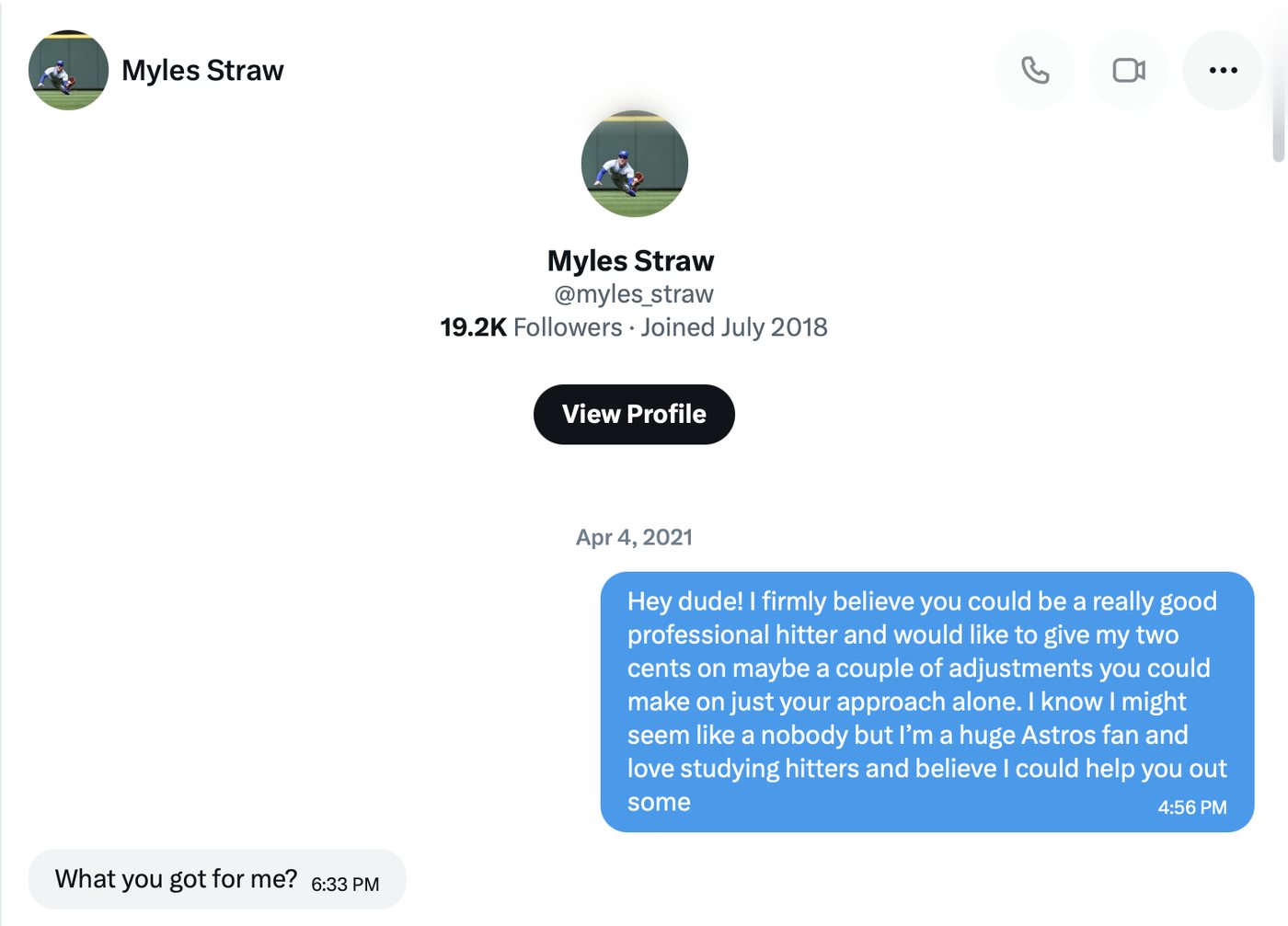
At the beginning of the 2021 season, I reached out to Myles Straw, the starting center fielder for the Houston Astros - a player seen as a below-average hitter and a fast baserunner/defensive-first type of player. The year before, he had a .207 batting average and a .244 on-base percentage.
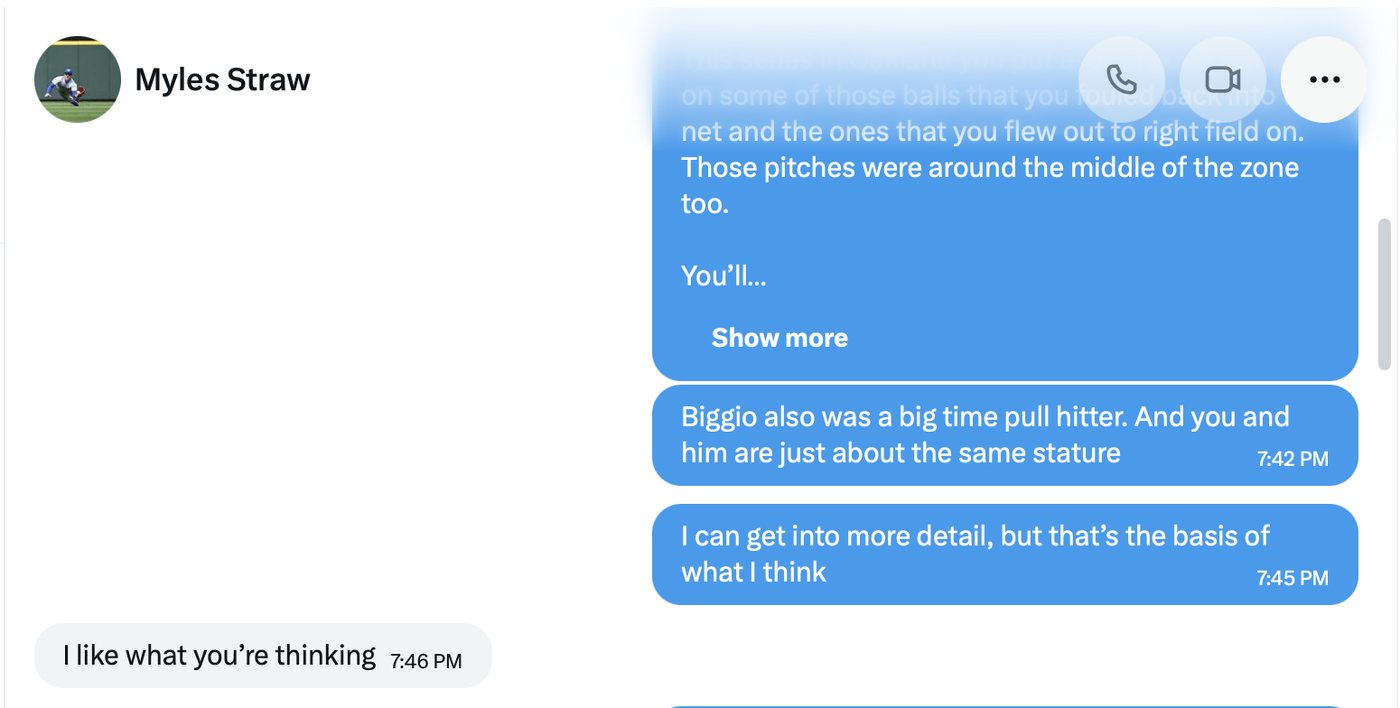
I offered him a handful of adjustments built around the same pull-the-ball-in-the-air principles I teach every hitter, along with some other things as it related to his approach and swing decisions. He was open to it, made the changes, and improved.
After a midseason trade to the Cleveland Guardians, he carried that same performance with him. That consistency earned him a five-year, $25 million extension the following offseason. Want to know the crazier part? I didn't even see him in person. I told him everything he should do over text and through photos/videos.
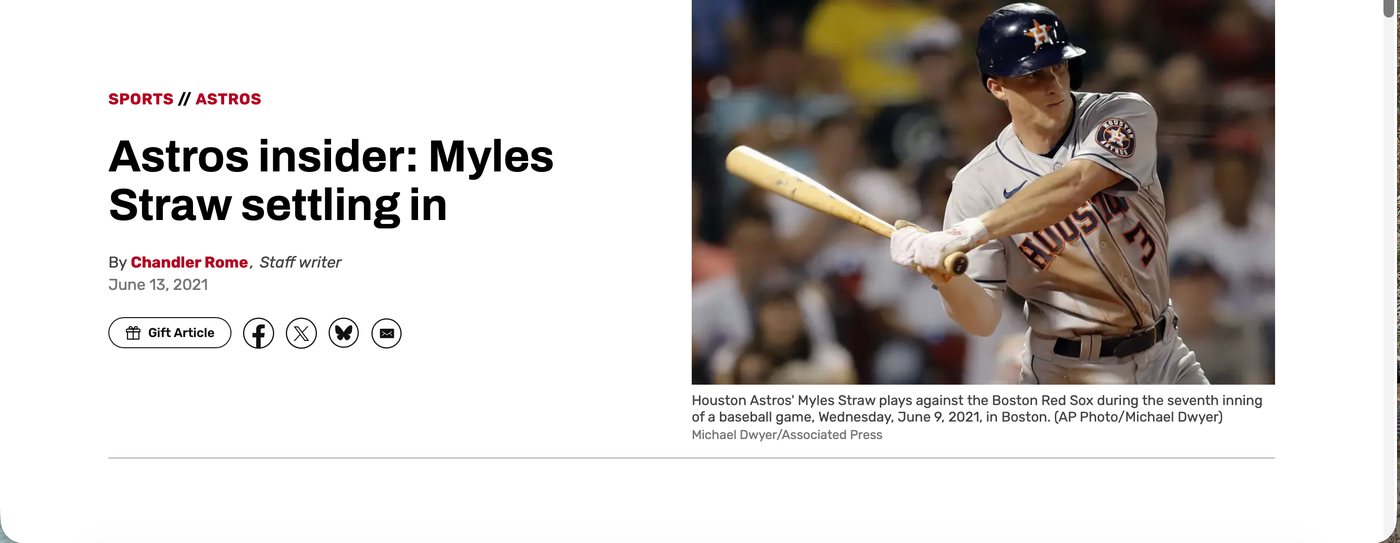
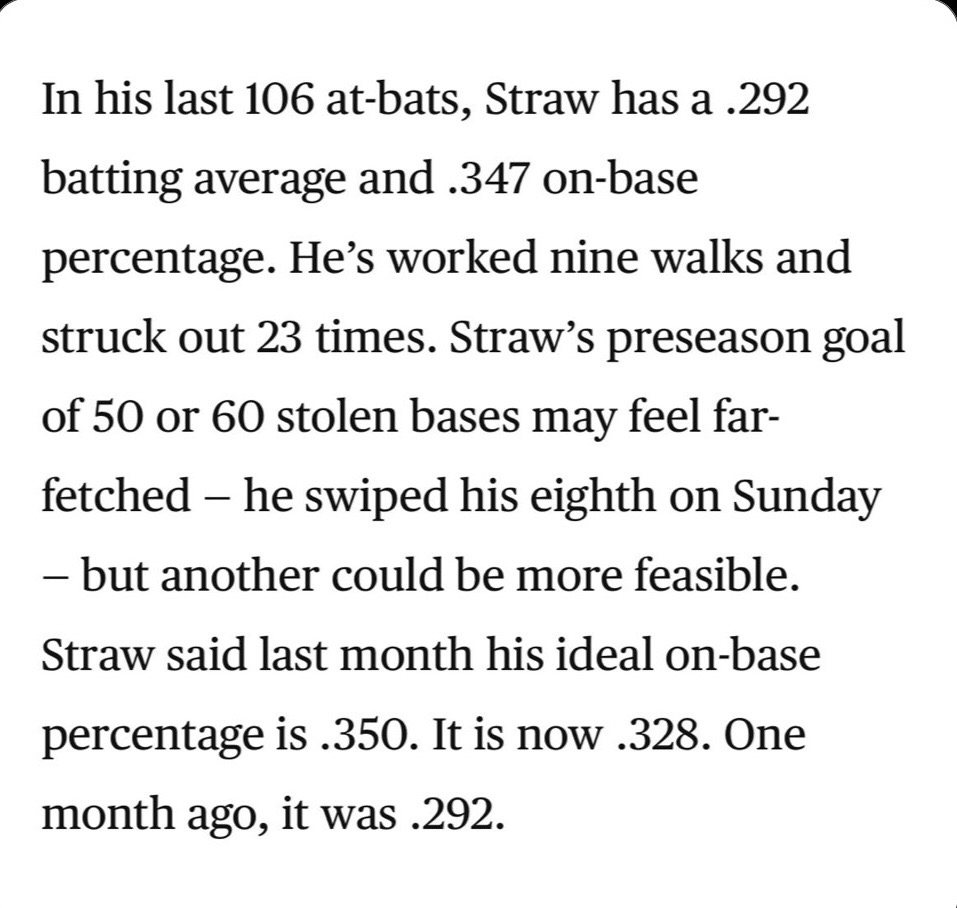
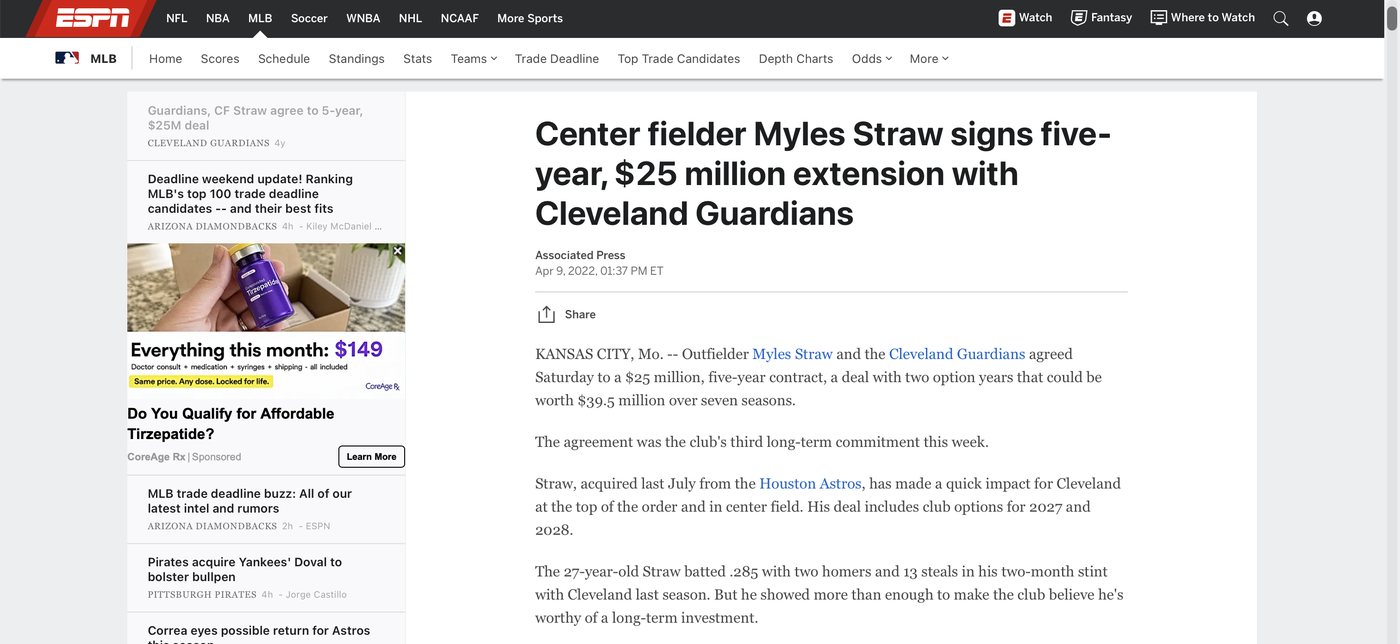
Here's what sealed it. When the Astros traded him to Cleveland at the July 2021 deadline, nothing dropped off. He kept right on producing. In 60 games with the Guardians that season, Straw hit .285 with 16 doubles, 2 home runs, and 13 stolen bases, ranking among American League leaders in hits, runs, walks, and doubles over the final two months. He finished the 2021 season with a .271 batting average and a .349 on-base percentage. The Guardians saw a hitter whose above-average bat held steady after the trade. No fluke, no drop-off. And that consistency played a major role in them committing to the five-year, $25 million extension that offseason.
Myles Straw's story isn't a lucky break. It's what happens when a hitter stops guessing and starts training around what the data actually rewards. That same principle works for the below-average bat fighting for playing time and the above-average hitter chasing elite. My mission is simple: give every hitter the truth, the plan, and the results to back it up, and change how this game is taught, one hitter at a time.
The only question left is whether you're ready to be the next story.
Find the program that fits your goals. Or reach out and let's talk about your game.